





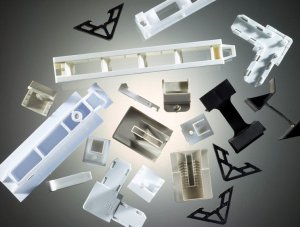
For business owners, design engineers, and procurement leaders managing high-volume plastic components, the global sourcing playbook of the past two decades has reached its limit. What once appeared to be cheap overseas unit pricing now carries hidden overhead, volatility, and operational exposure.
As Michael Araten, President of The Rodon Group, frequently highlights to industry leaders, navigating today’s manufacturing landscape requires evaluating total landed cost and total landed risk. Basing long-term production strategy purely on foreign labor costs ignores a shifting macroeconomic reality.
Domestic, fully automated plastic injection molding isn’t just a manufacturing alternative—it is a strategic shield. By keeping high-volume production on American soil, companies can simultaneously insulate themselves against three major supply chain threats.
1. Tariff Volatility: Eliminating Geopolitical Uncertainty
Relying on offshore molding means operating at the mercy of unpredictable trade policies, shifting duty schedules, and unexpected tariffs. An overnight policy change can instantly erode profit margins or force emergency redesigns and vendor switches.
The Domestic Shield
Sourcing custom plastic injection molding services domestically removes foreign regulatory exposure entirely. Pricing structures remain predictable, contracts remain stable, and financial models aren’t disrupted by sudden trade friction.
2. Maritime Disruption: Erasing Port Chokepoints and Lag Times
Ocean transit is inherently vulnerable. From canal blockades and port congestion to container shortages and labor disputes, overseas shipping regularly turns predictable production schedules into months of delayed inventory.
Working Capital Tied Up at Sea
Inventory floating on a container ship for weeks—or months—represents locked-up capital and sluggish responsiveness to demand shifts.
The Domestic Shield
Domestic production replaces month-long ocean voyages with reliable over-the-road freight. Shorter supply lines mean agile lead times, lower safety stock requirements, and the ability to scale production up or down rapidly based on real-time market demand.
3. Energy-Driven Freight Inflation: Defending Against Fuel Surcharges
Shipping bulk plastic components across oceans requires immense energy. When global fuel prices spike, ocean carriers pass those costs directly to buyers through volatile Bunker Adjustment Factors (BAF) and emergency freight surcharges.
Shipping Air and Space
High-volume plastic components are often lightweight but bulky, meaning you frequently pay to ship empty volume across thousands of ocean miles.
The Domestic Shield
Manufacturing domestically eliminates thousands of miles of transit, drastically reducing fuel consumption per part and insulating procurement budgets from volatile energy markets.
The Rodon Advantage: Rewriting the Offshore Math

Historically, offshore manufacturing won on raw manual labor costs—both for molding parts and combining them downstream. The Rodon Group changes that calculus through continuous investment in facility scale, robotic molding, and advanced assembly capability.
When every press is outfitted with advanced robotics and automated quality controls, domestic manufacturing matches or beats offshore unit costs while delivering vastly superior reliability.
Beyond Molding: Integrated Semi- and Fully Automated Assembly
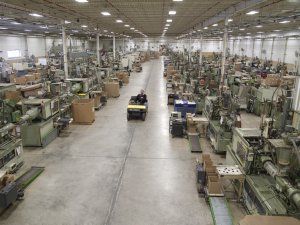
To further alter the economic math of doing business offshore, Rodon has expanded its capabilities to offer both semi-automated and fully automated assembly services.
For years, companies felt forced to source overseas to keep labor-intensive secondary operations cheap. Rodon eliminates this dependency by integrating automation directly into the production process:
- Eliminating Extra Freight & Handling: Assembling components in-house at Rodon removes the need to ship molded parts to a second facility or overseas subcontractor, saving thousands in extra transit and handling costs.
- Reducing Downstream Defects: Integrated, robotic assembly ensures every finished sub-assembly or packaged part meets rigid tolerance standards before it ever leaves the facility floor.
- Turnkey Speed-to-Market: Combining high-speed injection molding with automated assembly compresses project timelines from months to days, allowing engineering and procurement teams to respond instantly to demand fluctuations.
Traditional Offshoring Strategy
✘ Unpredictable Tariff Exposure
✘ 6-12 Week Ocean Lead Times
✘ Volatile Sea & Fuel Surcharges
✘ Expensive Manual Assembly Labor
✘ Multi-Vendor Assembly Risks
The Rodon Group Automated Shield
✔ 100% US-Based Price Stability
✔ Rapid Domestic Turnarounds
✔ Minimal Local Freight Transit
✔ In-House Automated Assembly
✔ Single-Source ISO Quality Control
Securing Your Production Pipeline
Navigating modern supply chain risks doesn’t require accepting higher piece costs or sacrificing margin. By leveraging high-volume domestic automated molding paired with advanced downstream assembly, business owners and procurement professionals can lock in cost predictability, streamline operations, and eliminate three of the largest risks facing modern manufacturing today.
Rethink Your Sourcing Math
Discover how domestic automation delivers offshore-competitive unit pricing with zero supply chain disruption.